Why deposits change credit decisions
A bank holding your deposits sees what no bureau shows: your cash flow, your balances, your payroll, your stability. That visibility reduces their uncertainty, and uncertainty is what underwriting prices. Deposit customers get the benefit of the doubt on borderline approvals, fatter starting limits, and friendlier reconsideration calls, because the analyst can see the money.
There is also a retention motive. Banks lose money when multi-product customers leave and they know it, so internal policy at most large banks explicitly favors existing customers in credit decisions. None of this is published as a formula, but the pattern is consistent across issuers and decades: the bank that holds your money wants to lend you more of its own.
The public example: Bank of America Preferred Rewards
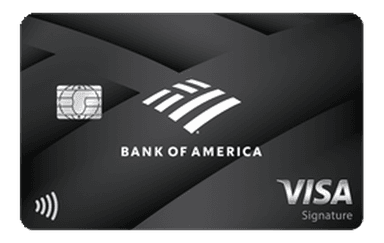
Most relationship math is informal. Bank of America publishes theirs. Preferred Rewards tiers key off your combined average balances across BofA deposit and Merrill investment accounts: Gold at $20k, Platinum at $50k, Platinum Honors at $100k, with rewards boosts of 25, 50, and 75 percent on their credit cards.
At Platinum Honors, the Premium Rewards card earns effectively 2.62 percent on everything, which beats every flat-rate cash card on the market, funded entirely by parking investments you already own at Merrill. Moving an existing brokerage account in kind, without selling anything, counts toward the tier. You change custodians, not investments, and the cards start paying like premium products.
Treat BofA as the visible tip of a general truth. Chase Private Client, Citigold, US Bank Smartly tiers, and the wealth arms of every major issuer run versions of the same trade: balances in, better credit terms and richer rewards out.
- ▸Gold, $20k combined balances: 25 percent card rewards boost
- ▸Platinum, $50k: 50 percent boost
- ▸Platinum Honors, $100k: 75 percent boost, the tier that makes BofA cards market-leading
- ▸Tiers use 3-month average balances; in-kind Merrill transfers qualify without selling
Business banking before business cards
The relationship effect is strongest on the business side, because business underwriting is more manual and more discretionary. A business checking account with months of real deposit history gives the underwriter a revenue picture no application form conveys, and business card approvals visibly improve when the issuer already banks the business.
The sequence matters: open the business checking account first, run genuine revenue and expenses through it for 3 to 6 months, then apply for the issuer's business card. At Chase in particular, where Ink approvals tightened sharply through 2025, an established business banking relationship is one of the few levers that still moves approval odds in your favor.
This only works with a real business and real activity. A checking account opened last week with $100 in it is not a relationship, and underwriters see thousands of those. The lever is history, not the account itself.
When moving $25k-$100k is worth it
Run the math as yield given up versus value gained. Cash moved from a 4 percent HYSA into a 0 percent big-bank checking account costs you 4 percent a year, which on $50k is $2,000. That is usually a bad trade for a rewards boost alone. The trade gets good when the balance can sit in investments rather than cash: a Merrill brokerage holding the index funds you already own gives up nothing and still counts toward the tier.
It also gets good when a specific credit outcome is on the line. If an established relationship is the difference between approval and denial on a business line you actually need, or between a $5k and a $25k starting limit, the option value can dwarf the yield spread for the months it takes. Set a review date, and if the relationship is not paying, move the money back. Deposits are a lever, not a marriage.
Credit courses sell relationship banking as an insider module. The entire method is public: read the tier tables, move assets in kind where possible, build business deposit history before business applications. We keep the tier numbers current here for free.
Execution checklist
Pick the target bank based on the credit you want in the next 12 months, not the toaster they offer for opening. If the goal is BofA card rewards, the path is Merrill. If the goal is Chase business cards, the path is Chase business checking with real activity. If the goal is a credit line for a growing company, the path is whichever bank's branch staff will actually know your name.
Mind the friction costs: account minimums, transfer fees, the weeks an ACAT transfer takes, and any monthly fees the balance tiers are supposed to waive. Confirm the waiver thresholds before moving anything. Then give the relationship time to season. Most tier calculations use 3-month averages, and underwriting gives weight to tenure measured in months and years, not days.